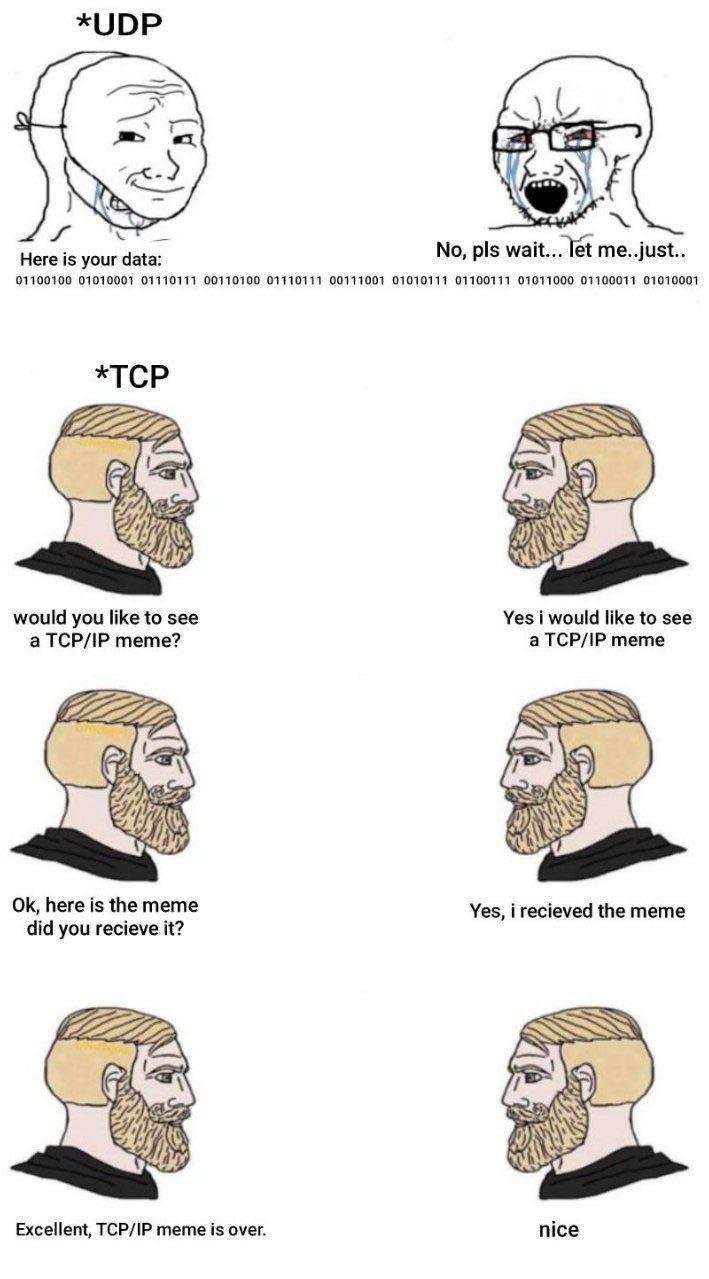
TCP vs UDP Meme Version

TCP and UDP are two fundamental communication protocols used in computer networks. TCP provides reliable, connection-oriented data transmission with error checking and ordered delivery, making it ideal for web browsing and file transfers. UDP, on the other hand, is a connectionless protocol designed for speed and low latency, making it the preferred choice for real-time applications such as online gaming, video streaming, and VoIP.

31 Jul 2026 Technology & Product
TCP vs UDP Meme Version

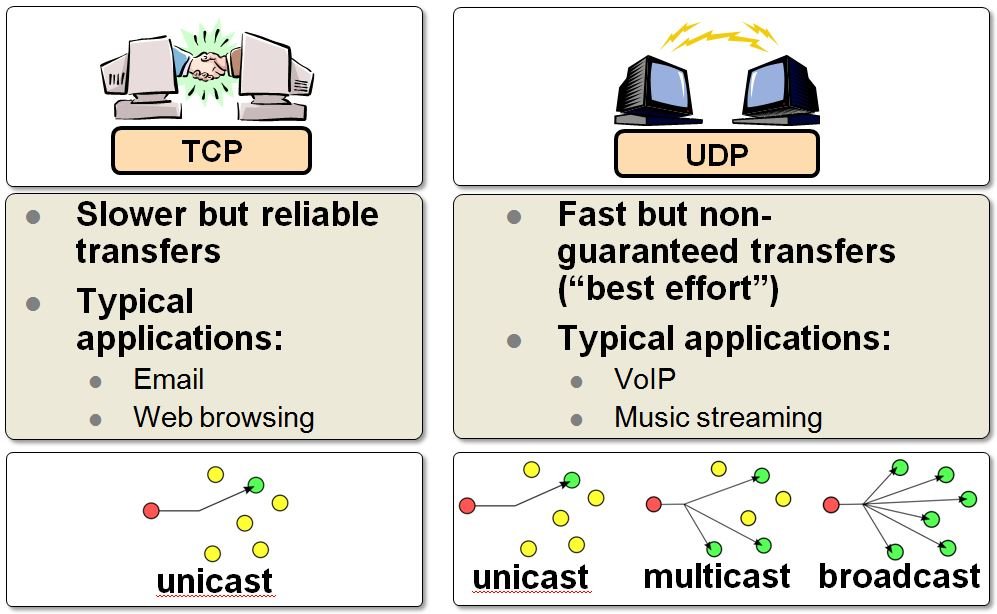
Transmission Control Protocol (TCP) is a connection-oriented, reliable communication protocol where the data can be transmitted both ways after a link has been established. TCP is ideal for transporting information like still photographs, data files, and web pages because it includes built-in mechanisms to check for faults and ensure data is sent in the order it was sent. 

UDP - User Datagram Protocol is a connectionless and straightforward internet protocol where error-checking and recovery services are not considered. UDP is essentially used for establishing low-latency and loss-tolerating connections

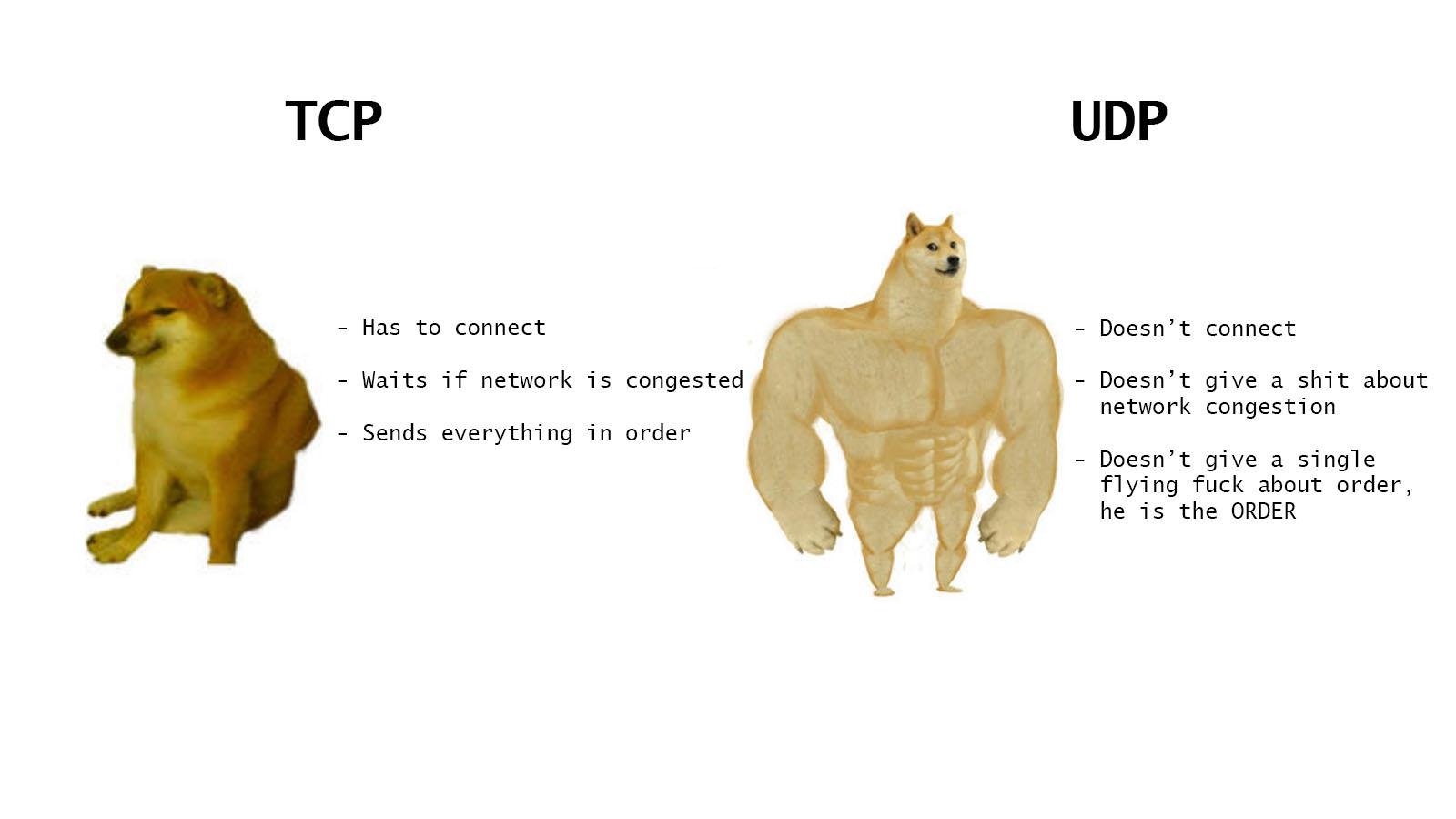
The critical difference between the protocols is that TCP is a connection-oriented protocol, whereas UDP is a connectionless protocol.
 

Here are the other vital differences between TCP and UDP, compiled by Manvi Tyagi - follow her on Twitter - https://twitter.com/ManviTyagi9.  


More in Technology & Product

How to Use Postman for API Testing: A Complete Beginner’s Guide

Postman is a popular API platform that helps developers and testers send requests, inspect responses, validate functionality, organize test cases, and automate API testing. This guide explains how to use Postman for API testing, from creating your first request to managing environments, testing authentication, organizing collections, and running automated test suites.

Read

The Role of Artificial Intelligence in SEO Strategy: Smarter Search Optimization for Modern Businesses

Search Engine Optimization (SEO) has evolved far beyond keywords and backlinks. Artificial Intelligence (AI) is transforming how businesses research keywords, create content, analyze competitors, optimize websites, and understand user intent. This guide explores the growing role of AI in SEO strategy, its benefits, limitations, and how businesses can combine AI with human expertise to achieve sustainable search engine success.

Read

Implementing Amazon S3 for Image Storage in Laravel Applications

Managing images efficiently is essential for modern web applications. As applications grow, storing files on the local server can create challenges related to scalability, performance, security, and backups. Amazon Simple Storage Service (Amazon S3) provides a reliable cloud-based storage solution that integrates seamlessly with Laravel. This guide explores the advantages of using Amazon S3 for image storage, best practices for implementation, and why businesses building scalable applications.

Read